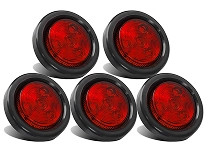
Automotive Marker Light Assemblies: Purpose and Types
Automotive marker light assemblies help make a vehicle's position, outline, or direction easier to recognize in low light and changing visibility. Depending on the vehicle and installation point, the category includes side marker lights, front and rear marker lamps, clearance lights, identification lights, and combination marker-and-turn-signal units. Passenger cars, trailers, recreational vehicles, buses, and commercial trucks can use different shapes and mounting styles. An assembly may include a lens, housing, light source, socket or connector, and mounting hardware; some designs are sold as complete units, while others accept replaceable bulbs. Before comparing appearance or brightness, identify the function and location of the lamp on your vehicle. Ubuy provides a way to discover international automotive lighting products, but fitment and product details should be checked for each listing.
- Side, clearance, identification, and combination lamp styles
- Complete assemblies or serviceable bulb-and-housing designs
- Choose by vehicle, position, and intended signaling function
Light Sources, Lenses, and Key Features
The light source and optical design influence how a marker lamp operates and how it fits into a vehicle's lighting system. LED marker lights use light-emitting diodes and are often selected for compact layouts, while incandescent assemblies use familiar replaceable bulbs in compatible housings. Lens colors commonly include amber and red, with clear lenses used in some configurations; the intended color and function depend on the vehicle and installation position. Examine lens shape, visibility angle, connector type, wire leads, voltage specification, and whether the assembly supports steady illumination or a combined signal function. A sealed housing can help limit exposure to moisture and debris, but construction details vary. Compare the listed specifications with the original component rather than assuming that lamps with similar dimensions are interchangeable.
- LED and incandescent light-source options
- Lens color, visibility angle, and signal functions matter
- Check voltage, connector, and housing specifications
Fitment, Wiring, and Vehicle Compatibility
Correct fitment involves more than matching a lamp's general appearance. Check the vehicle's make, model, year, body style, and installation position, then compare the replacement assembly with the original part. Dimensions, mounting-hole spacing, lens profile, connector shape, wire count, and polarity can all affect installation. Some marker lights connect through a plug, while others use individual wires or a socket; electrical compatibility should be verified before purchase. For trailers and larger vehicles, consider how the lamp connects to the existing lighting circuit and whether it is part of a combined stop, turn, or clearance arrangement. When available, use a part number or product fitment guide to narrow choices. Ubuy can help shoppers explore international options, while careful specification checks remain essential for selecting a compatible assembly.
- Match vehicle details and mounting position
- Compare connectors, wiring, dimensions, and part numbers
- Verify electrical function before installation
Materials, Durability, and Maintenance
Marker light assemblies are commonly made with molded plastic lenses and housings, with designs varying in shape, finish, and sealing method. A sturdy lens and secure housing can help the lamp withstand routine road exposure, vibration, dust, and weather, though the product's stated construction should guide expectations. Inspect the lens for cracks, clouding, loose fit, or water intrusion, and check wiring and connectors for corrosion or damage. Cleaning with a suitable, non-abrasive product can help maintain lens clarity; avoid harsh chemicals that may affect plastic. If a replaceable bulb fails, confirm its exact type and rating before fitting a replacement. For an integrated LED assembly, the service procedure may differ from a bulb-based unit. Follow vehicle and product instructions, and seek qualified help when wiring or access is unclear.
- Review housing, lens, and sealing details
- Inspect for cracks, moisture, and connector corrosion
- Use compatible replacement bulbs and careful cleaning
Common Applications and Helpful Accessories
Marker lights serve a range of vehicle applications, from side visibility on passenger vehicles to outline and clearance lighting on trailers, buses, recreational vehicles, and commercial trucks. Some installations call for a low-profile rectangular lamp, while others use round, oval, flush-mount, or surface-mount designs. Related products may include replacement bulbs, sockets, pigtail connectors, gaskets, bezels, mounting screws, and wiring accessories. Brands such as HELLA, Grote, Truck-Lite, and Peterson are recognized in automotive and vehicle lighting; compare the specifications of individual products rather than relying on brand name alone. When browsing Ubuy, shoppers can explore different styles and components, then confirm that the assembly suits the vehicle's mounting location and electrical setup. Consider whether you need a single replacement, a matched pair, or multiple lamps for a larger vehicle.
- Styles for cars, trailers, buses, and commercial vehicles
- Accessories include sockets, gaskets, and connectors
- Compare product specifications across recognized brands
Select the Right automotive marker light assemblies
Start by identifying the lamp's purpose, mounting position, and the vehicle it serves. Record the original part number when possible, then compare measurements, lens color, mounting method, connector, voltage, and light-source type with the replacement listing. Decide whether you need a complete assembly or only a bulb, socket, lens, or wiring component. For an LED upgrade, confirm electrical and physical compatibility rather than assuming it will work with the existing circuit. Review the product information for included hardware and installation requirements, and check whether the lamp is sold individually or as a set. A careful comparison can reduce fitment surprises and help maintain the intended lighting function. If specifications are uncertain, consult the vehicle documentation or a qualified technician before ordering or installing the assembly.
- Confirm function, position, and original part details
- Compare dimensions, electrical fit, and included components
- Consult documentation or a technician when uncertain